Cursive Letters to Words and Sentences
Many beginners can trace a single cursive letter, then freeze when the practice page asks for a whole word. That jump feels bigger than it looks. Writing one letter well is about shape. Writing a word or sentence also adds rhythm, spacing, and confidence.
That is why the middle step matters. Learners usually need a bridge between alphabet review and full-page writing. A steady transition keeps practice calm and makes each new layer feel manageable.
If someone is already using a cursive alphabet reference guide, the next question is usually simple. What comes after A to Z, and how do letters become real handwriting without turning practice into frustration?
Disclaimer: The information and assessments provided are for educational purposes only and should not replace professional medical advice, diagnosis, or treatment.
Why the jump from letters to sentences feels hard
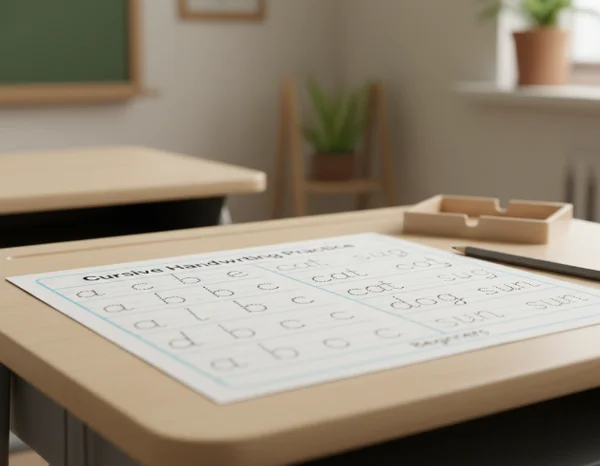
Single-letter practice is simple to correct. A learner can slow down, look at one model, and try again. Once short words appear, the task changes. Now each letter has to keep its own shape while also flowing into the next one.
Sentences add even more demands. The writer has to think about spaces, line control, repeated letters, and whether the whole line still feels readable. That is why many learners look ready on alphabet drills but still feel shaky when asked to write a full thought in cursive.
A gentle progression works better than a sudden leap. The site's cursive letter examples are most useful when they become a checkpoint for the next stage, not the end of practice.
Signs a learner is ready to move past single letters
What smooth lowercase practice usually looks like
The first sign is consistency, not speed. A learner does not need perfect letters, but the main lowercase shapes should feel familiar enough that tracing is no longer the only option.
Texas Tech University K-12 introduces cursive at the beginning of third grade. It also notes that connected letters can support faster writing because the writer is not stopping to form each letter separately. That idea matters here because the goal of letter practice is not just recognition. It is readiness for connected movement.
A useful checkpoint is whether the learner can write a few lowercase letters in a row without losing shape every time. If the letters still collapse as soon as they are joined, it usually means more single-letter or short-pair practice is still helpful.
When uppercase letters should join the routine
Uppercase letters do matter, but they do not need to dominate the earliest practice. Most daily words rely more heavily on lowercase forms, so many beginners progress more smoothly when lowercase patterns become steadier first.
Uppercase practice becomes more useful once the learner can start short words without constant resetting. At that point, capitals can be added for names, sentence openings, and simple copying tasks. That feels more natural than treating uppercase forms as the main event too early.
This is also easier for parents and teachers. Instead of teaching every capital at once, they can add the ones that appear in familiar names or simple sentence starters.
How to build practice from letters to short words
Start with word groups that repeat familiar strokes
The jump from letters to words works best when the words do not introduce everything at once. Repetition helps. Short words with familiar curves or repeated joins let the learner focus on flow instead of constant problem-solving.
Texas Tech University K-12 says the first 25 lessons focus on practice for each letter of the alphabet before students are expected to expand their cursive use. That sequence supports a simple teaching idea: let letter shapes settle before expecting steady word writing.
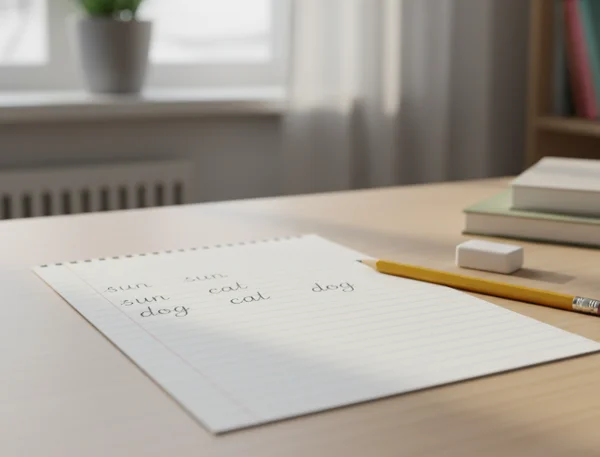
In practice, that means starting with 2-letter or 3-letter words built from letters the learner already knows well. Families and teachers can group practice around similar strokes, then slowly widen the set. This keeps the first word-level sessions feeling achievable.
Keep sessions short enough to protect letter shape
Long drills often make cursive worse, not better. Once the hand gets tired, neat joins fade and spacing becomes inconsistent. Short sessions protect quality.
The [Texas Tech University K-12 handwriting guide] recommends daily practice, short sessions, and supervision so learners do not build weak habits through fatigue or frustration. That is a strong reminder that 5 focused minutes can do more than 20 rushed ones.
It helps to stop while the learner still has control. A short win makes the next session easier to start. An overlong session often teaches the opposite lesson.
How to extend short words into simple sentences
Sentence choices that are easy to copy
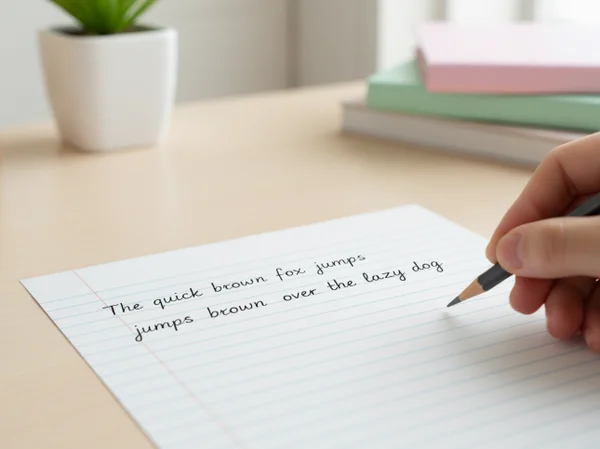
Not every sentence is a good first sentence. Beginners do better with short lines, familiar vocabulary, and repeated letter patterns. Simple copywork works better than open-ended writing at this stage because it reduces decision-making.
[UCR Extension's cursive writing guidance]recommends starting with lowercase letters, practicing slowly, setting aside time each day, and focusing on smooth movements that form words and sentences. That supports the idea of using short, calm sentence practice instead of asking for long creative writing too soon.
Good starter sentences are usually easy to sound out and easy to see. They might use the learner's name, a simple classroom phrase, or a short line with common letters. The goal is flow, not originality.
What to correct first and what to ignore
Early sentence practice can create a long list of mistakes, but correcting everything at once is rarely helpful. Pick one or two priorities. For most learners, that means letter shape, spacing, and staying on the line.
Other issues can wait for a later pass. If every loop, slant, and capital gets corrected at once, the learner can lose confidence before the sentence stage has even settled in. Focused feedback keeps practice clearer.
This is where the site's alphabet practice reference stays useful. When one letter starts causing trouble inside a sentence, go back to that model, fix the pattern, then return to the sentence. That back-and-forth is normal.
Next steps for calmer cursive confidence
Moving from letters to words and sentences is not a single leap. It is a sequence. First the learner recognizes shapes. Then the learner connects a few familiar letters. After that, short words and easy sentences begin to feel less fragile.
That is why structured progression matters more than pressure. When practice stays short, familiar, and readable, cursive starts to feel like real handwriting instead of a test page. The site works best as a lightweight support tool for that process, especially when learners need quick models and simple practice direction.
If handwriting frustration becomes severe or persistent, seek professional help. A qualified teacher, occupational therapist, or healthcare provider can offer support beyond online information.