Cursive Alphabet for Special Needs: Adaptive Teaching Strategies
The journey of learning to write is a fundamental part of a child's education. But what happens when traditional methods don't work? For educators and parents, watching a bright student struggle with cursive handwriting can be incredibly frustrating. For children with learning differences like dyslexia, dysgraphia, or ADHD, the flowing lines of cursive can feel like an impossible puzzle. This isn't just an academic hurdle; it's an emotional one.
This practical guide offers solutions to help every child succeed with cursive. We will explore practical, compassionate, and effective strategies that make learning cursive accessible for every child. You don't have to rely on outdated, one-size-fits-all lesson plans. Instead, you can create a supportive learning environment that celebrates progress, not perfection.
At Cursive Alphabet, we believe that everyone deserves the chance to master the art of handwriting. Our platform provides free, interactive tools designed to support diverse learning styles. With resources like our adaptable worksheets, you can begin to implement these inclusive strategies today. Discover how to unlock your student's potential and make writing an enjoyable skill by exploring our free learning tools.
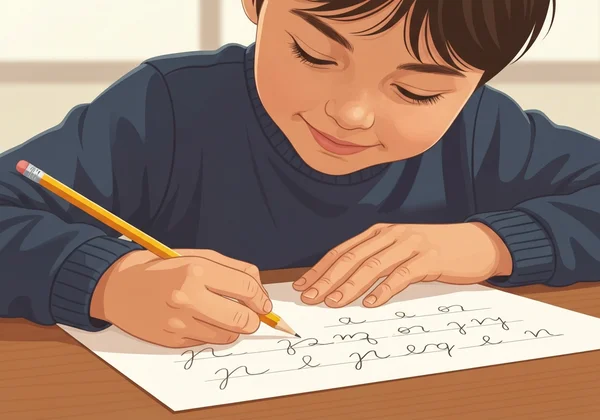
Understanding Cursive Alphabet Challenges for Different Learning Needs
Before we can help, we must first understand the specific obstacles that children with learning differences face. Cursive writing involves a complex mix of visual processing, fine motor skills, and sustained attention. A challenge in any one of these areas can make the entire process feel overwhelming. By recognizing the root cause of the struggle, we can tailor our teaching methods to be far more effective.
Dyslexia and Visual Processing in Cursive Learning
Dyslexia is commonly known for reading challenges. However, it also affects visual processing and sequencing skills, both of which are essential for handwriting. Students with dyslexia may struggle to distinguish between similar-looking cursive letters, like 'n' and 'm', or 'e' and 'l'. They might also have trouble remembering the correct sequence of strokes required to form a letter.
The continuous flow of cursive, which is often cited as a benefit, can become a source of confusion. Following the connected line of text without losing their place can be difficult. These students need clear, distinct visual cues and a method that breaks down letter formation into manageable, memorable steps.
Dysgraphia and Motor Coordination Issues
Dysgraphia is a specific learning disability that affects a person's ability to write. It directly impacts fine motor skills, motor planning, and spatial awareness. Children with dysgraphia often struggle with holding pencils properly, maintaining consistent pressure, and forming smooth letters. These challenges can be both physically exhausting and frustrating.
Their handwriting may appear messy, with irregularly sized and spaced letters. They may struggle with the continuous, flowing movements required for cursive, often lifting the pen when it isn't necessary. The core challenge here is a disconnect between the brain's instruction and the hand's execution. Therefore, strategies must focus on building motor memory through repetition and sensory feedback, rather than simply demanding neatness.
ADHD and Focus Strategies for Cursive Practice
Attention-Deficit/Hyperactivity Disorder (ADHD) presents its own unique set of challenges. The detailed, repetitive nature of traditional cursive practice can be difficult for a child who struggles with sustained focus and impulsivity. They may rush through their work, leading to sloppy letter formation and a failure to learn the proper techniques.
Long practice sessions can be counterproductive, leading to frustration and burnout. Students with ADHD thrive with short, engaging activities that provide immediate feedback. Breaking down practice into brief, focused intervals and incorporating game-like elements can transform cursive practice from a tedious chore into an achievable and rewarding task.
Adaptive Teaching Strategies for Cursive Success
Once you understand the "why" behind a student's struggles, you can implement adaptive strategies that work with their unique learning profile, not against it. The goal is to build confidence and competence by creating a positive and empowering learning experience. These methods are not about lowering expectations; they are about providing a better ladder to reach them.
Multisensory Approach to Cursive Instruction
One of the most effective strategies for diverse learners is a multisensory approach. This means engaging multiple senses—touch, sight, sound, and movement—to reinforce learning. Instead of just looking at a letter and trying to copy it, students can learn its shape and feel in many different ways.
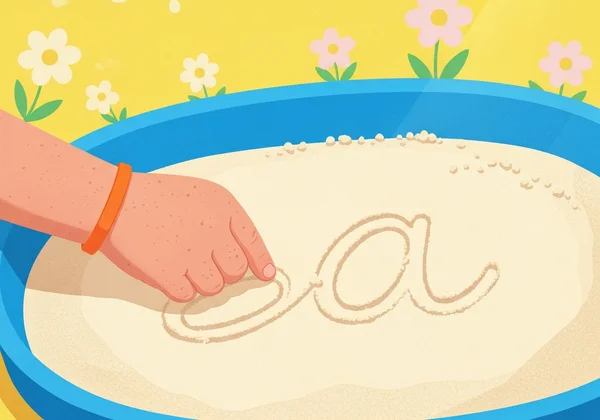
For example, have them trace letters in a tray of sand or shaving cream. Use raised-line paper to provide tactile feedback. Say the letter's name and sound aloud while tracing its shape in the air with large arm movements. This variety helps create stronger neural pathways, making it easier for the brain to remember the letter's form and the motor plan required to write it.
Chunking and Pacing Techniques
For many students, especially those with ADHD or dysgraphia, staring at a full page of practice can be overwhelming. The technique of "chunking" involves breaking down the task into small, manageable pieces. Instead of practicing the entire alphabet, focus on just two or three letters with similar stroke patterns (like 'c', 'a', and 'd').
Similarly, adjust the pacing of your lessons. Short, frequent practice sessions of 5-10 minutes are often more effective than one long 30-minute block. Celebrate the completion of each small "chunk" to build momentum and a sense of accomplishment. This approach prevents cognitive overload and keeps the student engaged and motivated.
Visual Aids and Cursive Guides
Clear visual supports are essential for students who struggle with visual processing or sequencing. Traditional worksheets can sometimes be too cluttered. Look for or create resources with simplified layouts. Use color-coding to highlight starting points and directional arrows to guide the flow of each stroke.
Providing a laminated cursive alphabet chart for their desk gives students a quick reference, reducing anxiety when they forget a letter's form. At Cursive Alphabet, we offer a variety of printable worksheets that you can adapt for your student. By providing these simple yet powerful visual guides, you empower learners to become more independent in their practice.
Technology Tools and Resources for Inclusive Cursive Learning
In today's digital world, technology offers powerful tools to support inclusive cursive learning. Digital platforms can provide the interactivity, immediate feedback, and adaptability that traditional methods often lack. By combining proven teaching strategies with modern resources, we can create a truly personalized learning experience for every child.
Digital Adaptations for Cursive Practice
Interactive apps and websites can transform cursive practice into a fun and engaging game. These platforms can offer animated stroke guides that show the correct formation in real time. They can also provide instant feedback, gently correcting a student without the pressure of a teacher looking over their shoulder.
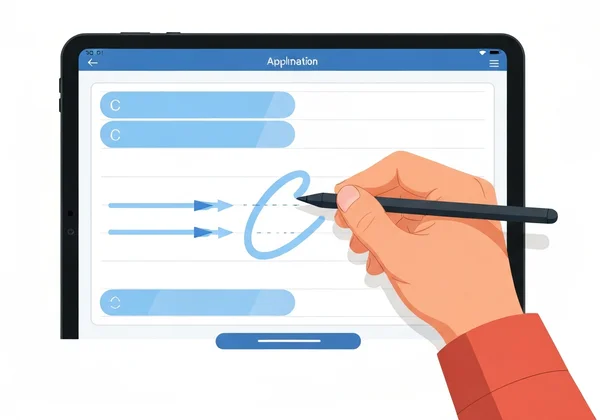
Using a stylus on a tablet can be a great intermediate step for students struggling with the fine motor control needed for a pencil. This allows them to practice the movements of cursive writing in a low-stakes, easily erasable format, building their confidence before transitioning to paper.
Printable Modified Worksheets
While digital tools are valuable, the importance of pencil-on-paper practice cannot be overstated. The key is to use worksheets that are designed for success. This means using modified paper with raised lines, highlighted sections, or larger spacing to accommodate motor skill challenges.
At Cursive Alphabet, we understand this need. Our platform allows you to access and print a wide range of free cursive alphabet worksheets. You can select specific letters or letter combinations to create customized practice sessions that align perfectly with the "chunking" strategy. Explore our collection and find the perfect adaptive worksheets for your learner.
Interactive Learning Platforms
A comprehensive learning platform can tie all these elements together. A great site should offer more than just static PDFs. It should integrate learning modules, practice sheets, and even fun applications into one cohesive experience. This creates a one-stop resource for parents and educators.
For instance, after practicing letters on a worksheet, a student could use an online tool to see how those letters form words. Our own Cursive Font Generator is a fantastic tool for this. Students can type a word and instantly see it rendered in beautiful cursive, reinforcing the connection between individual letters and complete words.
Empowering Every Learner Through Adaptive Cursive Instruction
Helping a child with special needs master cursive handwriting requires patience and tailored strategies rather than a one-size-fits-all solution. It is about embracing a mindset of empathy, flexibility, and patience. By understanding the unique challenges presented by dyslexia, dysgraphia, and ADHD, we can move beyond frustration and toward empowerment. We are not just teaching handwriting; we are building confidence, fostering resilience, and opening doors to academic and personal success.
When we combine multisensory activities, chunking techniques, and modified tools with digital resources, we create learning pathways that respect how each child's brain works best. Every child can learn, and every child deserves the right tools for the job.
Are you ready to transform your approach to cursive instruction? Begin by exploring the free, accessible resources designed to support every type of learner. Start learning now and watch your students flourish with newfound confidence and skill.

The Takeaway
At what age should I start teaching cursive to a child with learning differences?
There's no single "right" age, as readiness depends on the individual child's motor skill development and ability to recognize letters. Generally, it's best to ensure they have a solid foundation in print handwriting first. For a child with learning differences, you might start slightly later, focusing on building foundational motor skills before introducing the complexities of cursive.
Can cursive help students with dyslexia improve reading skills?
Some evidence and theories suggest it can. Because cursive letters are distinct and the words are written in a continuous flow, it may reduce letter-reversal issues (like b/d confusion) and help students see words as whole units. However, the most important factor is using an instructional method that works for the child, whether it's print or cursive.
What are the most common mistakes when teaching cursive to special needs learners?
The most common mistake is sticking too rigidly to a traditional, one-size-fits-all curriculum. This includes forcing long practice sessions, providing visually cluttered worksheets, and focusing on neatness over correct letter formation. It's crucial to remain flexible, celebrate small victories, and adapt your methods to the child's specific needs. For support, our free resources can help you create a more flexible plan.
How can I modify traditional cursive instruction for motor skill challenges?
Start with "big body" movements, like tracing letters in the air, before moving to paper. Use materials that provide sensory feedback, such as textured paper or writing in a sand tray. Focus on a proper pencil grip and posture. Finally, use modified worksheets with larger letters and clearer guides, like those you can find by exploring our practice sheets.
Are there specific writing tools that help with cursive practice for special needs?
Yes, absolutely. Weighted pencils or pencil grips can provide better sensory feedback and encourage a proper grip for students with dysgraphia. Softer-leaded pencils (like a #2 or softer) require less pressure, reducing hand fatigue. For some, a stylus on a tablet can be a great starting point to practice the motions without the added challenge of pencil pressure.