Cursive Alphabet Fine Motor Skills Development
In our modern world, we spend more time tapping glass screens than holding a pen. This shift has created what experts call the "Digital Pen Gap." Many children and adults now struggle with the physical act of writing. Have you noticed that your hand feels tired after writing just a short note? This happens because writing, especially the cursive alphabet, requires a high level of fine motor skill.
Fine motor skills involve the small muscles in our hands and wrists. When these muscles are strong and well-coordinated, we can perform delicate tasks easily. Cursive writing is one of the best ways to develop these skills. Unlike block printing, where you lift the pen for every stroke, cursive is a continuous flow. This flow teaches the hand to move with precision and rhythm.
Mastering cursive letters transforms handwriting into an art form while sharpening your mind—no matter your age or skill level. Practicing cursive letters connects hand movements to mental focus, boosting coordination and creativity. If you are ready to begin this journey, you can start learning now with our interactive tools. This article will explore how cursive practice transforms motor development and provides practical tips for every age.

Understanding Fine Motor Development in Cursive Writing
To understand why cursive is so effective, we must look at how our bodies handle a pen. Writing is a complex task that requires the brain to send very specific signals to the fingers. When a child or an adult practices the cursive alphabet, they are not just memorizing shapes. They are training their nervous system to handle "fluidity."
In block printing, the movements are jerky and repetitive. In cursive, the movements are varied and connected. This variety forces the muscles to work in new ways, strengthening the "intrinsic muscles" of the hand. These are the small muscles that allow for the "pincer grasp." This grasp is essential for everything from buttoning a shirt to performing surgery.
How Cursive Alphabet Builds Hand-Eye Coordination
Hand-eye coordination is the ability of our vision system to coordinate information received through the eyes to guide the hands. When you write a cursive alphabet letter like 'f' or 'z,' your eyes must track the loops while your hand executes the curve. This requires constant feedback between the brain and the hand.
Because cursive letters are connected, the writer must look ahead to where the next letter will be. This "anticipatory movement" is a higher level of coordination than what is required for simple printing. By using free resources to practice daily, you can significantly improve how well your hands follow your eyes. This benefit extends beyond the classroom and can help with sports, musical instruments, and even typing.
How Cursive Tracing Boosts Brain Development
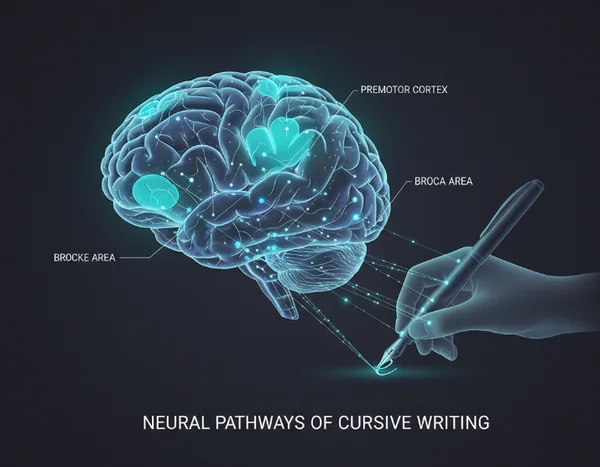
Tracing the cursive alphabet does something unique to the human brain. Scientists have found that the continuous motion of cursive activates areas of the brain that are not used during typing or printing. Specifically, it stimulates the "premotor cortex," which is involved in planning movements.
Tracing a letter creates a "motor map" in your brain. This mental blueprint helps you write the shape effortlessly over time. For children, this helps with literacy because the physical act of writing the letter helps them recognize it better when reading. For seniors, it provides a cognitive exercise that keeps the mind sharp. You can see this in action by using a cursive font generator to create custom words for tracing practice.
Age-Specific C Alphabet Exercises for Preschoolers to Seniors
Handwriting is a lifelong skill, but the way we practice it should change as we grow. The physical needs of a five-year-old are very different from those of a fifty-year-old. Tailoring your cursive alphabet practice to your current developmental stage ensures better results and less frustration.
Preschool to Kindergarten: Introduction to Cursive Shapes
At this early stage, we don't expect children to write perfect words. Instead, the focus is on "pre-writing" skills. Before they can master the cursive alphabet, they need to master the motions. Think of these as the building blocks of letters.
You can encourage children to draw "waves" in the sand, "loops" in the air, or "hills" on a chalkboard. These motions mimic the basic strokes of cursive. Using large movements helps develop the shoulder and elbow muscles. These muscles provide the stability needed for the hand to work later. Making it fun is key. You might practice cursive letters with our generator to show them how their name looks in beautiful loops, inspiring them to try drawing those shapes themselves.
Elementary Years: Connecting Letters into Words
This is the "golden age" for learning the cursive alphabet. During these years, children's hand bones are finishing their development. They are ready for more precise work. The biggest challenge here is the "connection." Learning how to move from an 'o' to a 'b' or a 'v' to an 'e' is a major milestone.
Practicing individual letters is a good start, but the real benefit comes from writing words. This teaches the hand how to maintain a consistent pressure and speed. If a child finds this difficult, it is often because their hand muscles get tired. Short, frequent sessions are better than one long practice. You can download printable worksheets that allow them to trace and then write independently to build confidence.
Middle School to Adults: Refining Cursive Alphabet Fluency
For older learners, the goal shifts from "how to write" to "how to write well." Many teenagers and adults want to develop a personal style or a more professional signature. At this stage, the cursive alphabet becomes a tool for self-expression and mental clarity.
Fluency means writing without having to think about every stroke. This is achieved through "rhythmic writing." Try writing to the beat of a slow song. This helps the hand move in a steady, relaxed flow. Adults find cursive practice meditative—it eases stress while keeping hands nimble. It is never too late to improve your handwriting and enjoy the artistic side of the alphabet.
Practical Activities to Strengthen Cursive Alphabet Muscles
If you find that your handwriting is messy or your hand cramps quickly, you may need to strengthen the muscles involved. You don't need a gym for this; you can do it at home with simple daily habits.
5 Daily Hand Strengthening Exercises for Cursive Writing
To write the cursive alphabet perfectly, your hand needs strength and flexibility. Try these five exercises every day:
-
The Sponge Squeeze: Soak a sponge in water and squeeze it as hard as you can with one hand. This builds the large muscles in the forearm.
-
Tweezers Task: Use a pair of tweezers to pick up small objects like beads or rice. This develops the precision of the thumb and index finger.
-
Finger Push-ups: Place your fingertips on a table and press down until your knuckles arch, then relax.
-
Playdough Patterns: Roll out playdough and use your fingers to "write" the cursive alphabet into the surface.
-
The Paper Crumple: Take a single sheet of paper and crumple it into a tiny ball using only one hand.
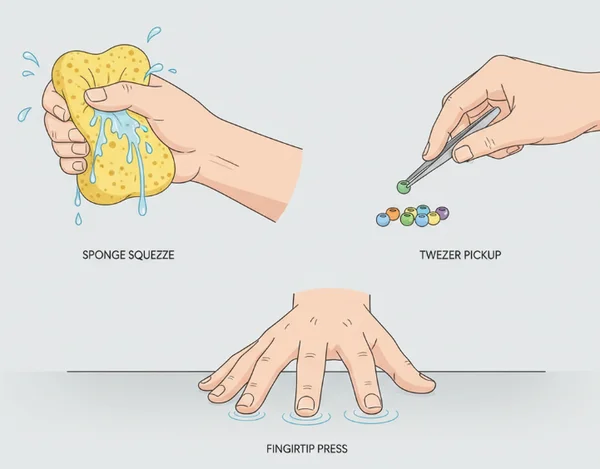
These exercises prepare your hand for the delicate work of using the generator or practicing on paper.
Cursive Alphabet Games That Make Practice Fun
Practice doesn't have to be boring. In fact, when we play games, our brains learn faster. For kids, you can try "Cursive Scavenger Hunt." Give them a list of words in cursive and ask them to find the objects around the house. This helps with letter recognition.
Another great game is "Invisible Writing." Have one person "write" a cursive alphabet letter on another person's back or in the air. The other person has to guess what the letter is. This builds "kinesthetic awareness," which is the sense of how your body moves in space. For a digital twist, you can use our online tool to turn secret messages into cursive and see who can decode them first.
Troubleshooting Common Motor Skill Challenges in Cursive Alphabet Learning
Sometimes, despite our best efforts, the letters don't look the way we want them to. This can be frustrating, but it is often a sign that a specific motor skill needs more attention.
When Letter Formation Becomes Frustrating: Intervention Strategies
If you or your child are struggling with the cursive alphabet, look for where the "break" is happening. Is it the size of the letters? Is it the slant? If the writing is too light, the hand might be weak. If it is too dark and the paper rips, the hand is too tense.
One strategy is to use "heavy work" before writing. Pushing against a wall or doing a few jumping jacks can help "wake up" the nervous system. Also, ensure the sitting posture is correct. Your feet should be flat on the floor, and your arm should be supported by the desk. If you need a clear visual of how a letter should look, see our guides to compare your work with the standard forms.
Adapting Cursive Alphabet Practice for Different Learning Styles
Not everyone learns the same way. Some people are visual learners, while others are "tactile" and need physical contact to understand.
- Visual Learners: Use different colors for different strokes. For example, write the upward strokes in blue and downward strokes in red.
- Tactile Learners: Write in a tray of salt or flour. The texture provides more feedback to the brain.
- Auditory Learners: Talk through the letter. As you write 'a,' say "around, up, down, and tail."
By adapting the cursive alphabet to your style, you remove the barriers to success. Our website offers various ways to view cursive styles, making it easier for every type of learner to succeed.
Your Journey to Confident Cursive Alphabet Writing Starts Here
Mastering the cursive alphabet is a rewarding journey that offers more than just pretty handwriting. It is a powerful way to boost your fine motor skills, sharpen your mind, and express your creativity. Whether you are a parent helping a child, a teacher looking for resources, or an adult rediscovering the joy of pen and paper, the benefits are clear.
Progress in cursive writing unfolds gradually, like learning a dance. Begin with basic strokes, celebrate small wins, and let your hand find its rhythm—perfection comes with practice. To make your practice easier, we have created a suite of free tools including worksheets and generators.
Are you ready to transform your handwriting? Visit CursiveAlphabet.cc today to download your first practice sheet and start your journey toward effortless, beautiful cursive writing.
Frequently Asked Questions about Cursive Alphabet and Motor Development
What age should children start learning cursive alphabet?
Most children are ready to begin learning the cursive alphabet around age 7 or 8 (second or third grade). By this time, their fine motor skills are developed enough to handle the complex connections between letters. However, younger children can start with "pre-cursive" shapes to build the necessary hand strength.
How can I tell if my child has fine motor skill challenges for cursive writing?
If a child struggles to hold a pencil correctly, tires quickly after writing only a few words, or has extreme difficulty staying within the lines, they may have fine motor challenges. Practicing the cursive alphabet can actually help improve these issues. You can test their skills with our simple worksheets to see where they might need extra help.
Are there signs that my child's cursive alphabet needs professional intervention?
If a child shows significant distress, completely illegible writing despite practice, or consistently reverses letters after age 8, it may be worth consulting an occupational therapist. However, for most children, consistent and fun practice using interactive learning modules is enough to overcome initial hurdles.
How long does it typically take to develop fine motor skills for cursive writing?
Consistency is more important than total time. With 10 to 15 minutes of daily practice, most people see a significant improvement in their cursive alphabet fluency within 4 to 6 weeks. The hand muscles adapt relatively quickly to the new rhythmic patterns.
Can adults improve their cursive alphabet handwriting with targeted exercises?
Absolutely! The brain remains "plastic" throughout life, meaning it can always learn new motor patterns. Adults often find that their cursive improves faster than children's because they have better focus. Using a font generator to create templates for your favorite quotes is a great way for adults to practice.